
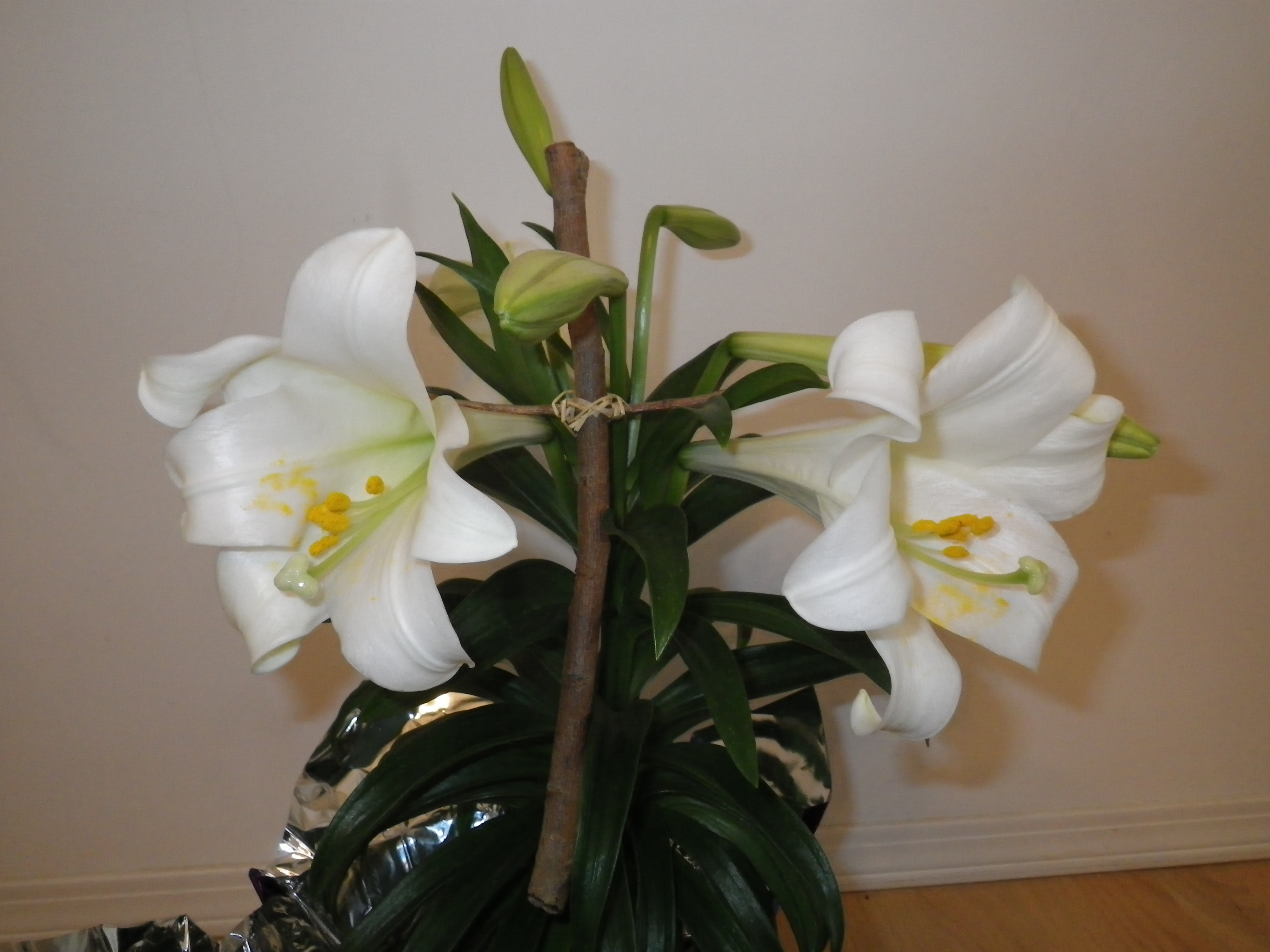
 Although the plan is to produce a monthly Dr. Sinn’s Bin, it seemed appropriate to write something about Easter. Is there something about Easter that can help us to understand more about the constructive mindset? Perhaps an appropriate exploration of the matter ought to take us back to the Garden of Eden.
We are told that there were two trees in the middle of the garden – the tree of life, and the tree of the knowledge of good and evil. We are not given any evidence that anything was said about the tree of life, but we are told that there was a warning about the tree of the knowledge of good and evil. We are told that Adam was instructed not to eat of this tree, for to eat of it would bring death.
Well, we know the rest of the story – Adam and Eve ate the fruit of what became the tree of death before they even thought of eating from the tree of life, and were banished from the garden so they couldn’t eat from the tree of life. I suppose it is possible to picture it this way: if death eats life, then life dies. Maybe that is why the tree of life (life) is protected from Adam and Eve (death) – life must continue to live, in order for man to have hope.
So what’s with this tree of death, the tree of the knowledge of good and evil? How are we to understand what happened when Adam and Eve ate of this tree? Did man attain knowledge of things, that is, scientific understanding? One way to define “good and evil” is that it represents universality, that is, everything. So did man attain the capacity to understand the science of everything? Perhaps, for man’s knowledge continues to grow by leaps and bounds. Did man attain knowledge of judgement, that is, knowledge of moral matters? Perhaps this is also true, and gives us a lead to understand why the fruit of this tree brings death.
Perhaps to understand the effect of judgement is to explore the aftermath of eating “the forbidden fruit.” We are told that soon after eating the fruit of judgement, Adam and Eve decide that they are naked. They gather leaves to cover themselves up, and hide. What are they afraid of? They have lost their freedom. They now live in fear of judgement, for they are judging themselves. In terms of constructive mindset theory, it looks like they may have adopted the use of the destructive mindset – judging themselves and each other to be the problem, and the result is death. The destructive mindset causes man to judge one another. If man were free to eat from the fruit of the tree of life after having eaten the fruit of the knowledge of good and evil, man would do so in a destructively judgemental way. What would be the verdict?
Now let’s move forward in time to the life of Jesus of Nazareth. He is referred to in many pictures – the Good Shepherd, the Lamb of God, the High Priest of a new order, the King of Kings, etc. Perhaps another picture of Jesus is to refer to Him as the Tree of Life. Jesus indeed referred to himself as being “the life,” and there are references to Him as being “revealed.” Perhaps in Jesus the tree of life becomes active in the history of the world.
The cross represents the tree of death; it is the tree of judgment. Jesus is judged to be guilty and sentenced to death. We are told that Jesus knew this would happen ahead of time, yet boldly took it on. We are told it was not his will to do so, for we are privy to his struggles in prayer in the Garden of Gethsemane the night of his arrest. Jesus is being instructed by his Father to eat of the tree of death, but it is not Jesus’ will to do so. This is in contrast to Adam and Eve who were instructed not to eat of the tree of death, but it became their will to do so. It is the Father’s will for Jesus to eat of the tree of death, but not Jesus’ will. What does Jesus choose? He chooses to do his Father’s will instead of his own, and goes forward to his death.
We are told that Jesus is nailed to the cross, but maybe it is the cross that is nailed to Jesus. Here we have a picture of Life choosing to eat the fruit of the tree of judgement, the tree of death. Instead of death eating life, as would have happened if Adam and Eve were allowed to eat from the tree of life, we now have life eating death. The tree of life is cut down by the death judgement of the tree of death. But there is a root that is buried in the ground. On Easter morning, we are told that the root remains alive, and the resurrection of Jesus is like a new sprout of life that has come from the Earth. Death has died, having been swallowed up by life.
Let us picture the judgments that go along with the destructive mindset, which the cross represents, as having been nailed to Jesus, as opposed to Jesus having being nailed to the cross. The tree of death is nailed to the tree of life. We have a picture of Jesus bearing the weight of our destructive judgmental nature, the death consequences of the destructive mindset when man judges himself or others. The cross represents the tree of the knowledge of good and evil. When judgementalism and death die, man becomes free to utilize the constructive mindset, where there is judgment of problems rather than judgment of people.
The constructive mindset is a way to help man to work out solutions to problems without holding man in judgment, whether we wrestle with low self-esteem, holding ourselves in judgment, or wrestle with various forms of abuse against people, involving bias against colour, nationality, creed, etc. Let us learn the lessons of the Easter Meister, adopt the constructive mindset, and live in harmony with one another.